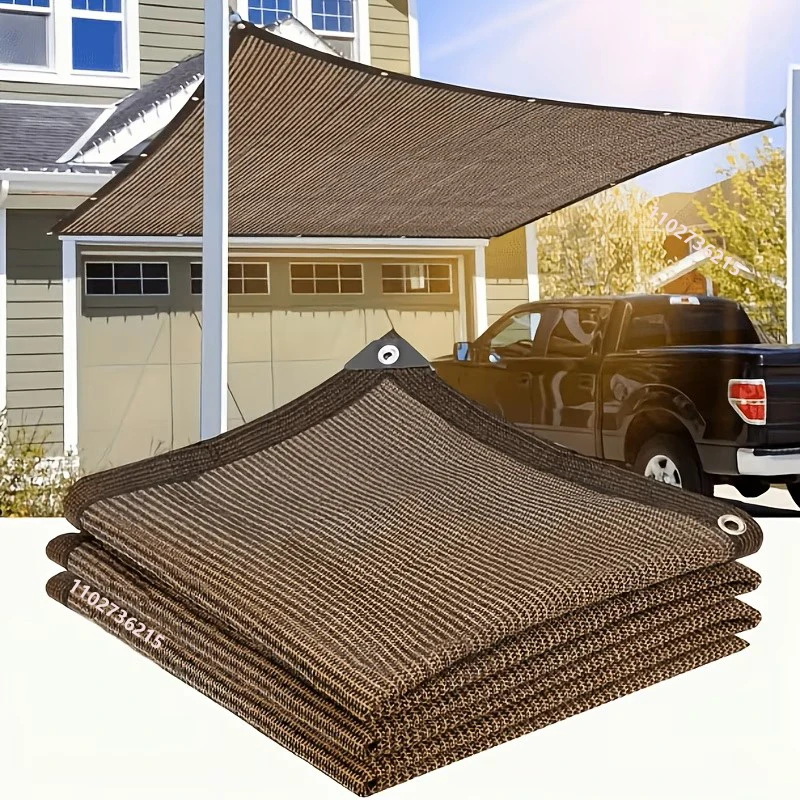
Rectangular Shade Netting for Gardens—Breathable, Windproof, and Sun-Blocking—Outdoor Awning, Ideal for Greenhouses
£14.99
Skip to product information


Rectangular Shade Netting for Gardens—Breathable, Windproof, and Sun-Blocking—Outdoor Awning, Ideal for Greenhouses
£14.99
-
Product Overview
The umbrella net is a mesh cover made of high quality materials, designed to provide effective sunlight blocking and environmental regulation functions for various scenes.
2. Product Material
Made mainly with materials such as polyethylene (PE) or polypropylene (PP). These materials have characteristics such as high strength, aging resistance and UV resistance, which ensures that the sunscreen can be used stably for a long time in outdoor environments.
3、Product Specifications
Sun protection rate
The colors black, blue, green, coffee, beige, blue and white have a shading rate of about 75-80%. They are surrounded by edges on all four sides and have corner guards at four angles, with 1 meter and 1 hole.
There are multiple shading rates available for your selection, such as 30%, 50%, 70%, 90%, and other different specifications. The selection can be based on actual lighting requirements and use scenarios. For example, in floral cultivation a shading rate of 50% to 70% can be chosen, while in special crops that are extremely sensitive to light a shading rate of 90% can be chosen. Customizable
Mesh Size
Includes woven mesh and smooth woven mesh. The woven mesh is usually loose, with common sizes such as 3mm x 3mm and 4mm x 4mm, and has good breathability; The flat woven mesh is relatively tight, such as 2mm x 2mm, which provides a better shading effect and can block smaller debris.
Size Specifications - The width range ranges from 1 meter to 10 meters, and the length can be customized according to customer needs, such as common lengths of 50 meters, 100 meters, etc., to meet the coverage requirements of different areas.
4. Product features
Sun visor and cooling system
Effectively block direct sunlight and reduce heat transfer. In the high temperature environment of summer, the temperature in the coverage area can decrease by 5 to 15 days. Celsius (the specific cooling range depends on the specifications and environmental conditions of the shading net), providing a comfortable environment for animals, plants, and personnel.
Adjust the intensity of light.
According to the selection of different shading rates, the light intensity can be flexibly adjusted to meet the special requirements of different organisms for lighting environments. For example, creating a low light environment for plants that prefer shade, or using it for industrial production that requires controlled light intensity.
Reduce water evaporation.
When covered on surfaces such as soil and water, it can reduce the circulation rate of air and direct sunlight, thereby reducing water evaporation by 30% to 60% (specific values vary depending on the environment), which is beneficial for maintaining soil moisture and water retention. resources.
Product usage scenarios
In the field of agriculture
Vegetable cultivation: In vegetable greenhouses or outdoor vegetable fields, vegetables can be protected from strong sunlight, reducing the occurrence of pests and diseases, and improving the yield and quality of vegetables.
Flower cultivation: Providing appropriate lighting and temperature environment for flowers to promote their growth and flowering. Different flower varieties can choose shading nets with different shading rates at different growth stages.
Orchard protection: Using shading nets on newly planted fruit trees can improve survival rates, prevent fruits from being sunburned or squeaked by birds during maturity, and increase the commercial value of fruits.
Landscape architecture field - Schools and leisure parks: comprehensive rest areas, children's play areas, etc., provide people with a comfortable outdoor leisure environment, avoiding inconvenience caused by direct sunlight.
Landscape plant maintenance: Protect precious landscape plants from harsh environments such as strong light, wind, and rain.
rural construction
Building materials: Covering building materials to prevent direct sunlight from causing aging and deformation of materials such as cement and wood. It can also provide shade for workers' rest areas to improve their working environment.
Building energy efficiency: Installing shading nets on the exterior walls or ceilings of buildings can lower indoor temperatures, reduce the use of air conditioning, and achieve energy-saving goals.
1. Material: The sunshade net is made of high-quality PE material, which is durable, wind resistant, and tear resistant. Anti sunlight and UV protection, foldable design, easy to transport. 2. High quality: The edge of the sunshade net adopts a 6-pin design, which is safer. Each corner of the sunshade cloth has a hole, so you can easily hang it up to meet your different needs. 3. Shadows: Breathable mesh can keep gardens, orchards, and greenhouses cool. Protect plants from direct sunlight
Note: The black shadow rate is about 75-80%, while blue, white, green, blue, beige, and coffee gray.
The shadow rate is about 80-85%